The Basics of Galaxies
Islands of Stars — and How We Build Them in a Computer
Marcus DuPont
Princeton University
Why Should You Care About Galaxies?
You Already Live Inside One
Last time we met a single star. Now zoom out: every star we talked about lives together in a galaxy.
Ours has a name you already know — the Milky Way.
That faint misty band across a truly dark night sky? That's our own galaxy, seen edge-on, from a seat inside it.
Galaxies By the Numbers
Galaxies in the observable universe
more galaxies than people who have ever lived, ~13,000× over
Stars in the Milky Way
and the Sun is just one of them
Light-years to Andromeda, our nearest big neighbor
its light left before humans existed
Of a galaxy's mass is invisible dark matter
the stars are the part we can actually see
What Is a Galaxy?
The Simplest Definition
A galaxy is a vast island of stars, gas, dust, and dark matter, all held together by gravity.
A single galaxy holds anywhere from a few hundred million to several trillion stars. Our ~200 billion? Just one galaxy's worth.
Mostly Stuff You Can't See
Same balancing act as a star — gravity holds it together — but here gravity has a secret helper.
Most of a galaxy's mass is dark matter: invisible material we only detect by its pull.
Galaxies spin so fast they should fly apart. The gravity that holds them together comes mostly from unseen dark matter — the stars we see are just the glowing tip of a much larger, dark iceberg.
Our Home: The Milky Way
A Barred Spiral
- A flat disk with curling arms and a bright bar of stars through the middle
- ~100–400 billion stars; the Sun sits about 26,000 light-years from the center — out in the suburbs
- We can't photograph it from outside — nobody has ever left. Every picture of "the Milky Way" from above is an illustration
This is the galaxy Gaia is mapping star by star — the same mission behind the data you worked with.
The Band Across the Sky
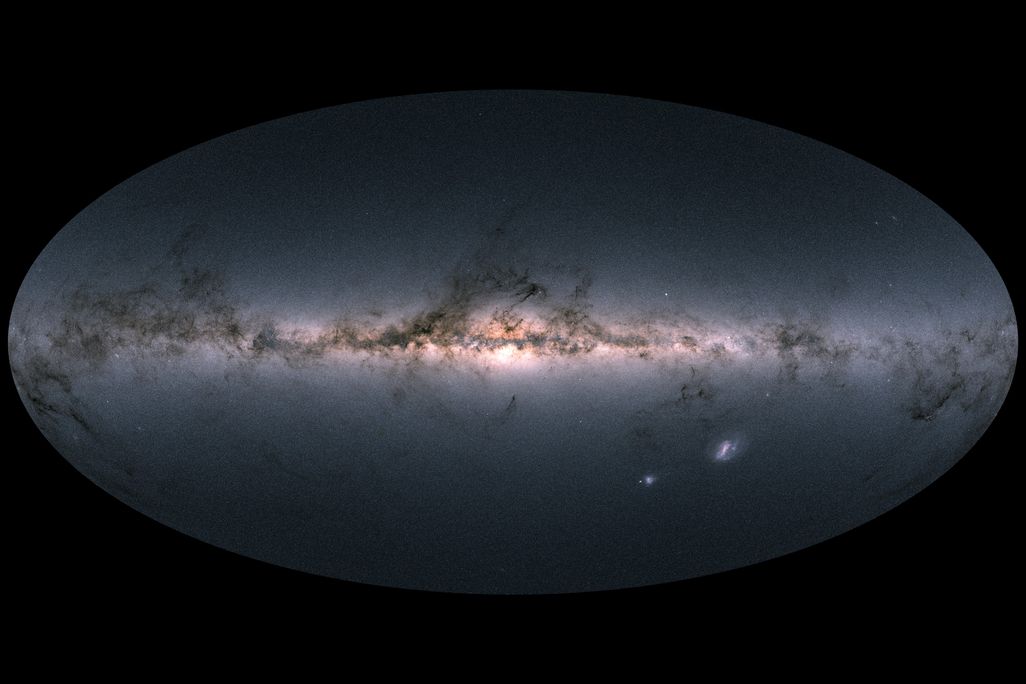
We can't step outside to photograph the Milky Way — so Gaia charted it from within. Nearly two billion stars, mapped across the whole sky, trace our galaxy's glowing disk seen edge-on.
ESA/Gaia/DPAC
A Giant at the Center
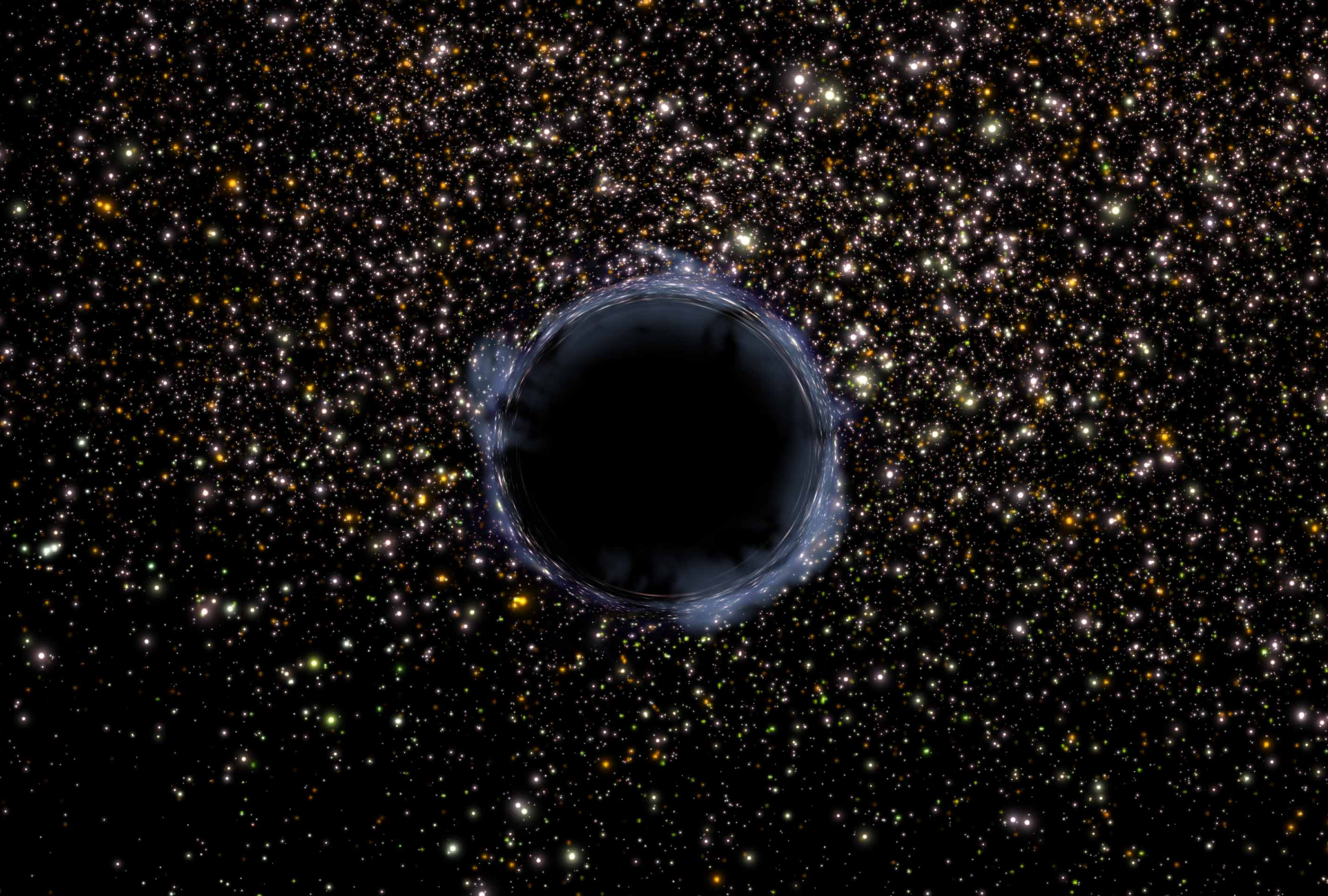
At the very heart of the Milky Way sits a supermassive black hole called Sagittarius A*. It weighs about 4 million Suns — and in 2022 we photographed its shadow for the first time.
Nearly every big galaxy has one of these monsters at its core. The galaxy simply orbits it, calmly — the way the planets orbit the Sun.
Illustration: NASA / ESA
Quasars: A Black Hole Outshining a Galaxy
Feed one of those central black holes enough gas, and the swirling, superheated material blazes.
A quasar can outshine its entire galaxy of hundreds of billions of stars — from a region barely bigger than our solar system.
They're the brightest steady beacons in the universe. The most distant ones shine to us from over 13 billion light-years away — a black hole's dinner, visible across almost the whole cosmos.
Spotlight: The Nearest Monster
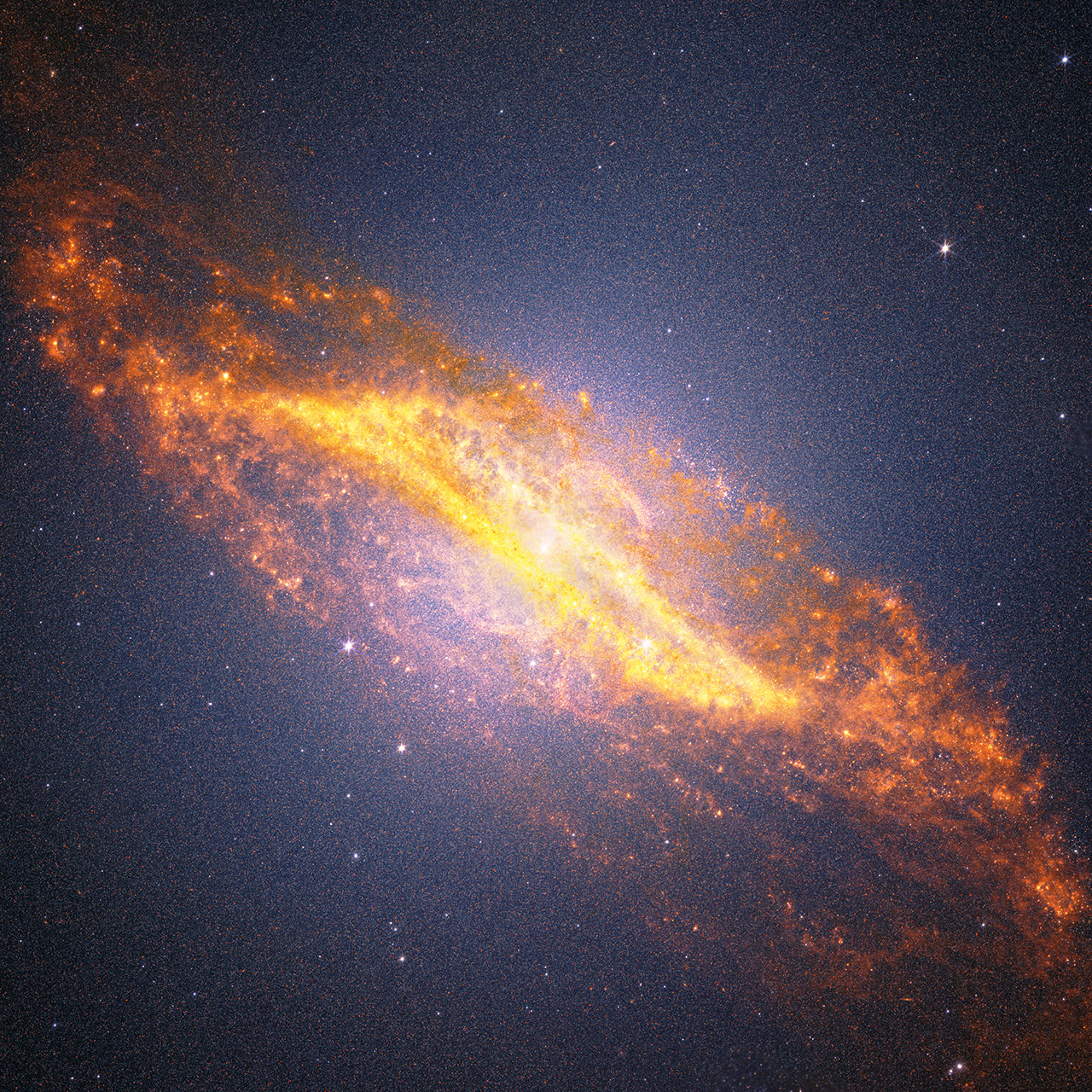
Centaurus A — the closest active galaxy, ~12 million light-years away. Its 55-million-Sun black hole fires jets at half the speed of light, in glowing lobes stretching nearly a million light-years. It's an elliptical caught mid-meal, swallowing a spiral.
NASA, ESA, CSA, STScI
How Long Is a Year… for the Sun?
The whole disk spins. The Sun circles the galaxy's center at ~500,000 mph — and still takes about 230 million years to loop around once.
That's one galactic year.
One galactic year ago, dinosaurs were just getting started. In its entire 4.6-billion-year life, the Sun has completed only about 20 laps.
The Milky Way Ate Its Neighbors
Big galaxies grow by swallowing smaller ones — and the wreckage lingers as streams of stars all moving together.
In the Gaia data — the same catalog from the stars talk — astronomers found the fossil of an entire galaxy the Milky Way devoured ~10 billion years ago (nicknamed Gaia-Enceladus).
Millions of stars around us are leftovers of that ancient meal — hidden in plain sight until the data revealed them.
A Zoo of Galaxies
What we actually see out there
They Come in Shapes
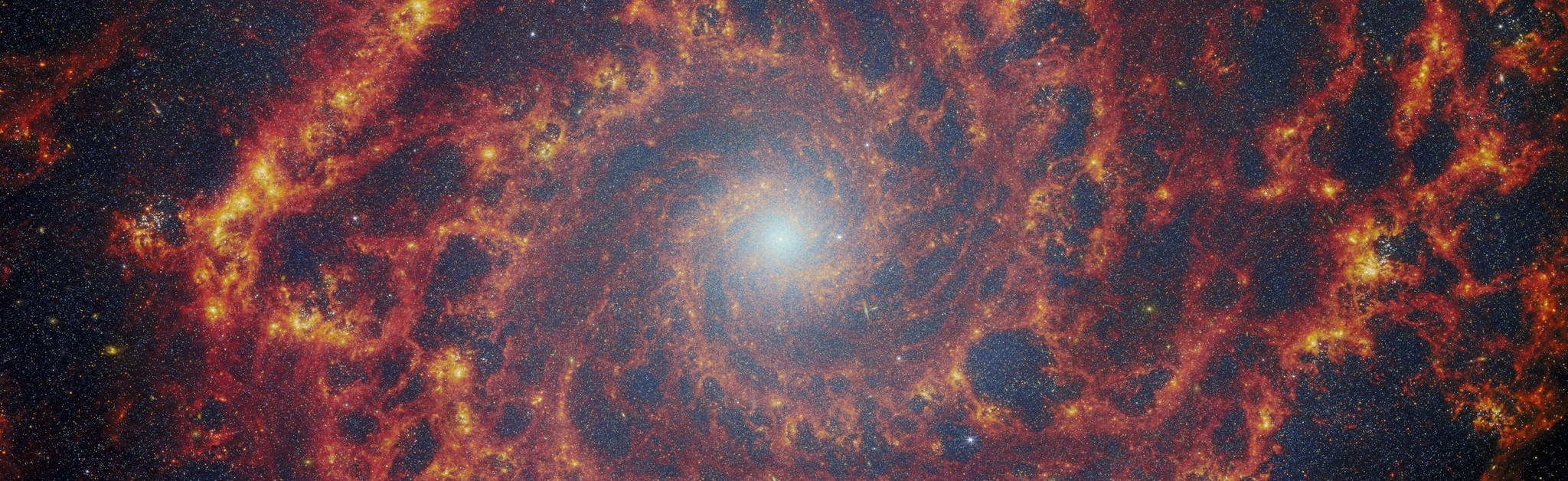
M74 — disk + arms, forming stars
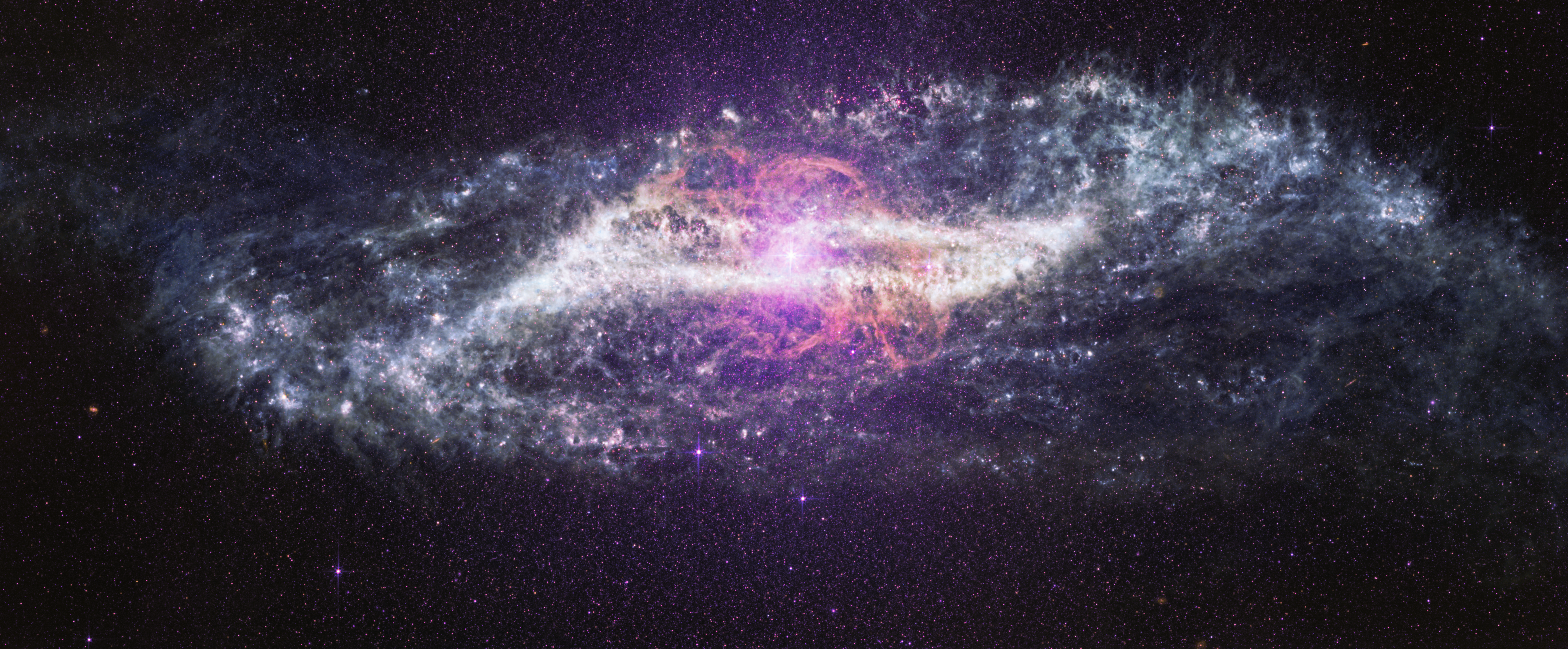
Centaurus A — smooth, old stars
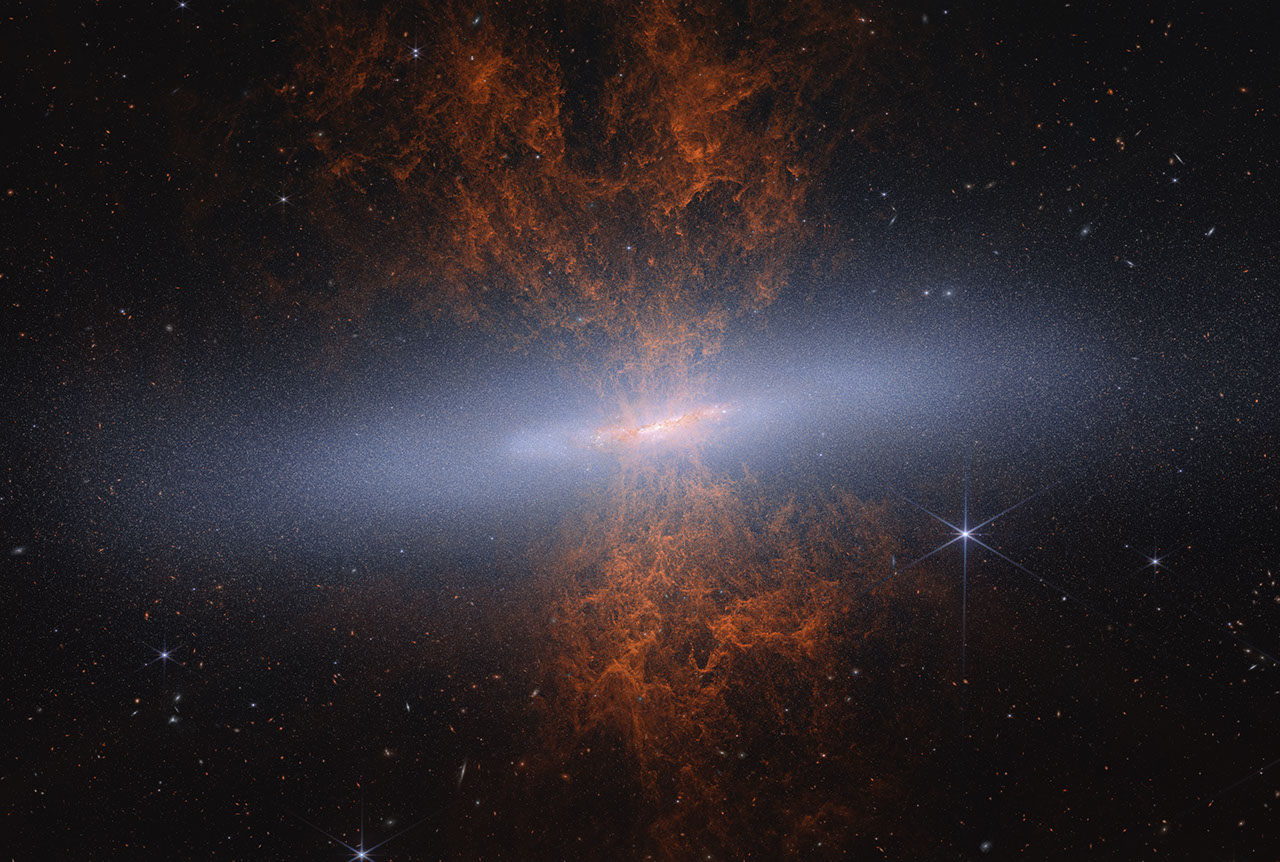
M82 — lopsided, chaotic
Edwin Hubble first sorted galaxies by shape in the 1920s. The scheme still works today.
Spotlight: The Sombrero Galaxy
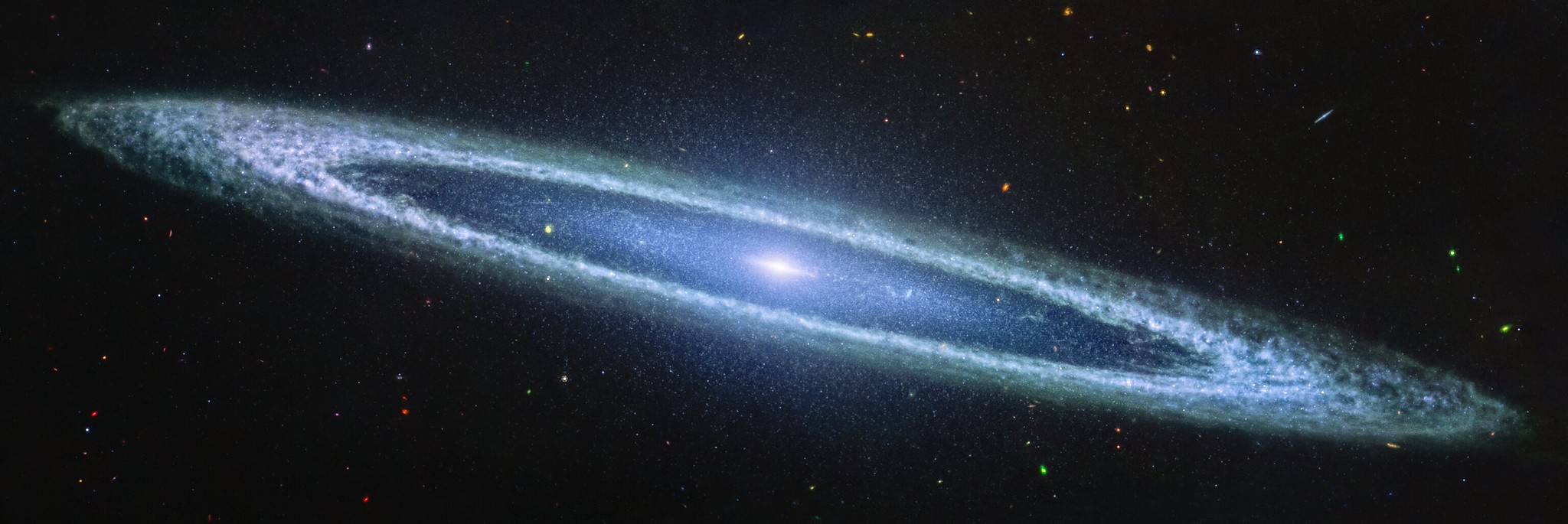
M104, seen nearly edge-on, 28 million light-years away. It's wrapped in about 2,000 globular star clusters — ten times the Milky Way's — and hides a central black hole of roughly 9 billion Suns.
NASA, ESA, CSA, STScI
Color Tells a Story (Again)
The same lesson from stars — color means temperature — now scaled up to a whole galaxy:
young, hot stars — actively forming
old, cool stars — "red and dead"
Color told us one star's temperature. It also tells us a whole galaxy's stage of life.
Spotlight: A Galaxy on Fire
M82 forms stars ten times faster than the Milky Way — a "starburst," set off by a near-miss with a neighbor. Those red plumes are a galactic wind: gas blasted outward by young stars and supernovae — the exact "feedback" the simulations have to get right.
ESA/Webb, NASA & CSA
Galaxies Live in Groups
- The Milky Way + Andromeda + ~50 smaller galaxies make up our Local Group
- Groups gather into clusters and superclusters, strung along a vast cosmic web of filaments and empty voids
- On the biggest scale, the universe looks like a tangle of glowing threads — galaxies beaded along them like dew on a spiderweb
Same story as the stars: enormous objects, separated by even more enormous emptiness.
Spotlight: A City Under Construction
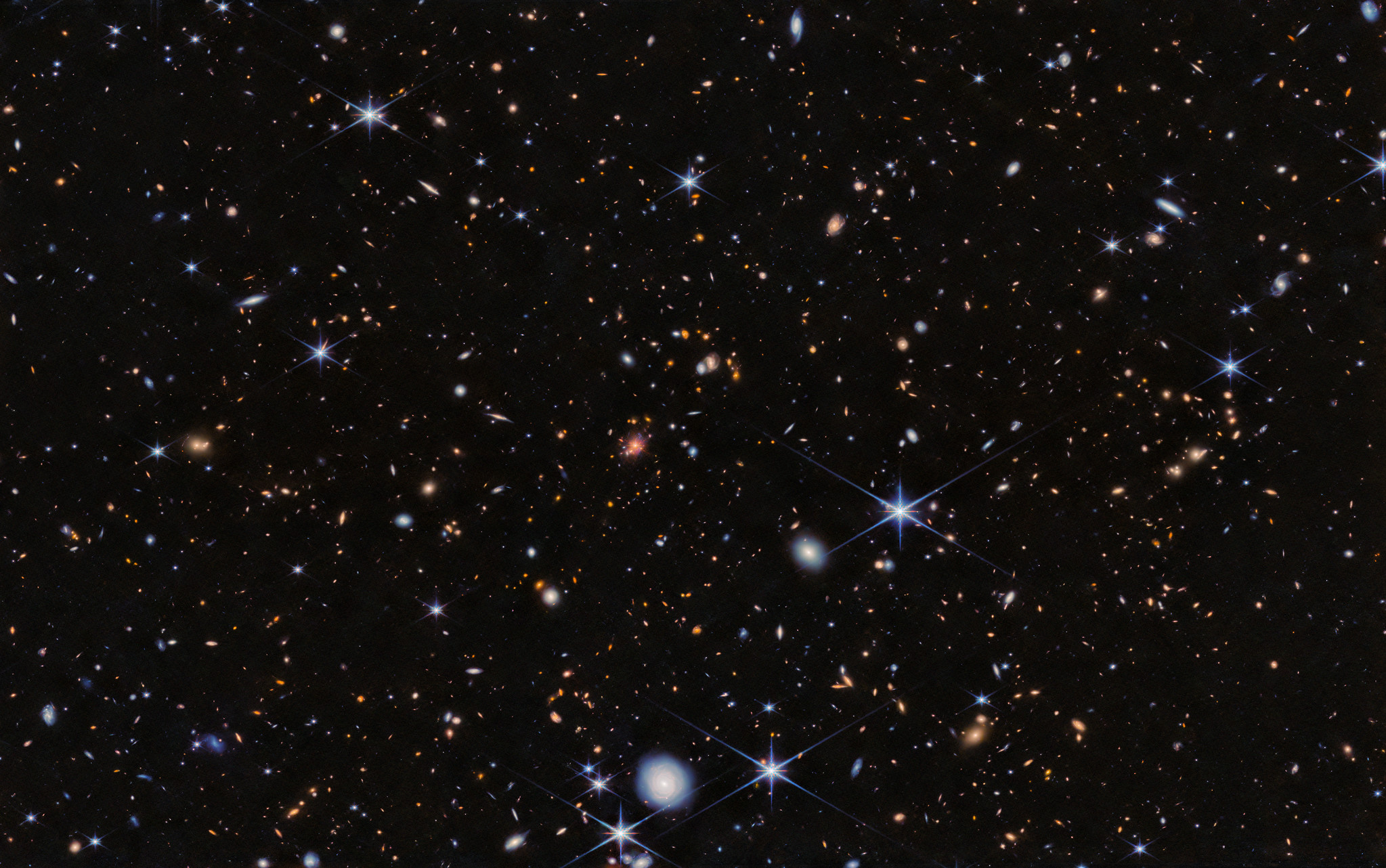
The Spiderweb — a galaxy cluster caught in the act of assembling, its light more than 10 billion years old. JWST found dozens of hidden baby galaxies streaming together into one of the largest structures in the universe: a "city of galaxies" under construction.
ESA/Webb, NASA & CSA
A Telescope Is a Time Machine
Light is fast, but finite. It takes time to cross space — so far-away always means long-ago.
- Andromeda: you see it as it was 2.5 million years ago
- A galaxy a billion light-years off: seen as it was a billion years ago
- Look far enough and you see galaxies as newborns, near the beginning of time
Every distant galaxy you see is a snapshot of its past. Telescopes are, quite literally, time machines.
Bending Light: A Cosmic "?"
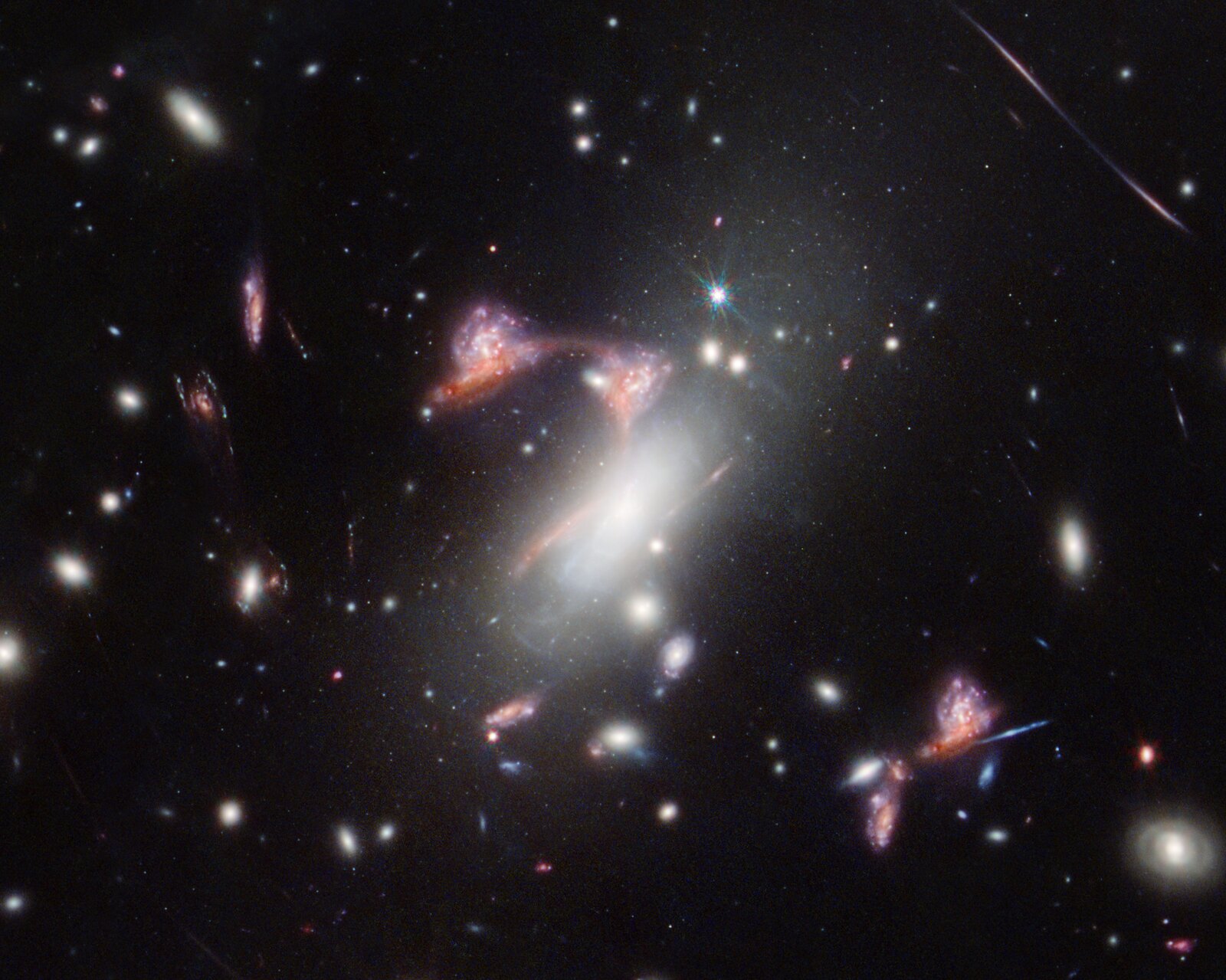
A massive galaxy cluster in front bends and magnifies the light of galaxies behind it — gravitational lensing — here smearing two interacting galaxies into a giant question mark. That pair, ~7 billion light-years away, is a preview of the Milky Way's own "teenage years."
NASA, ESA, CSA, STScI
The Deep Field
Point a telescope at a patch of "empty" dark sky — about the size of a grain of sand held at arm's length…

…and it fills with thousands of galaxies. Almost every dot here is an entire galaxy — billions of stars each, most seen for the very first time in this single exposure.
A Baby Picture of the Milky Way
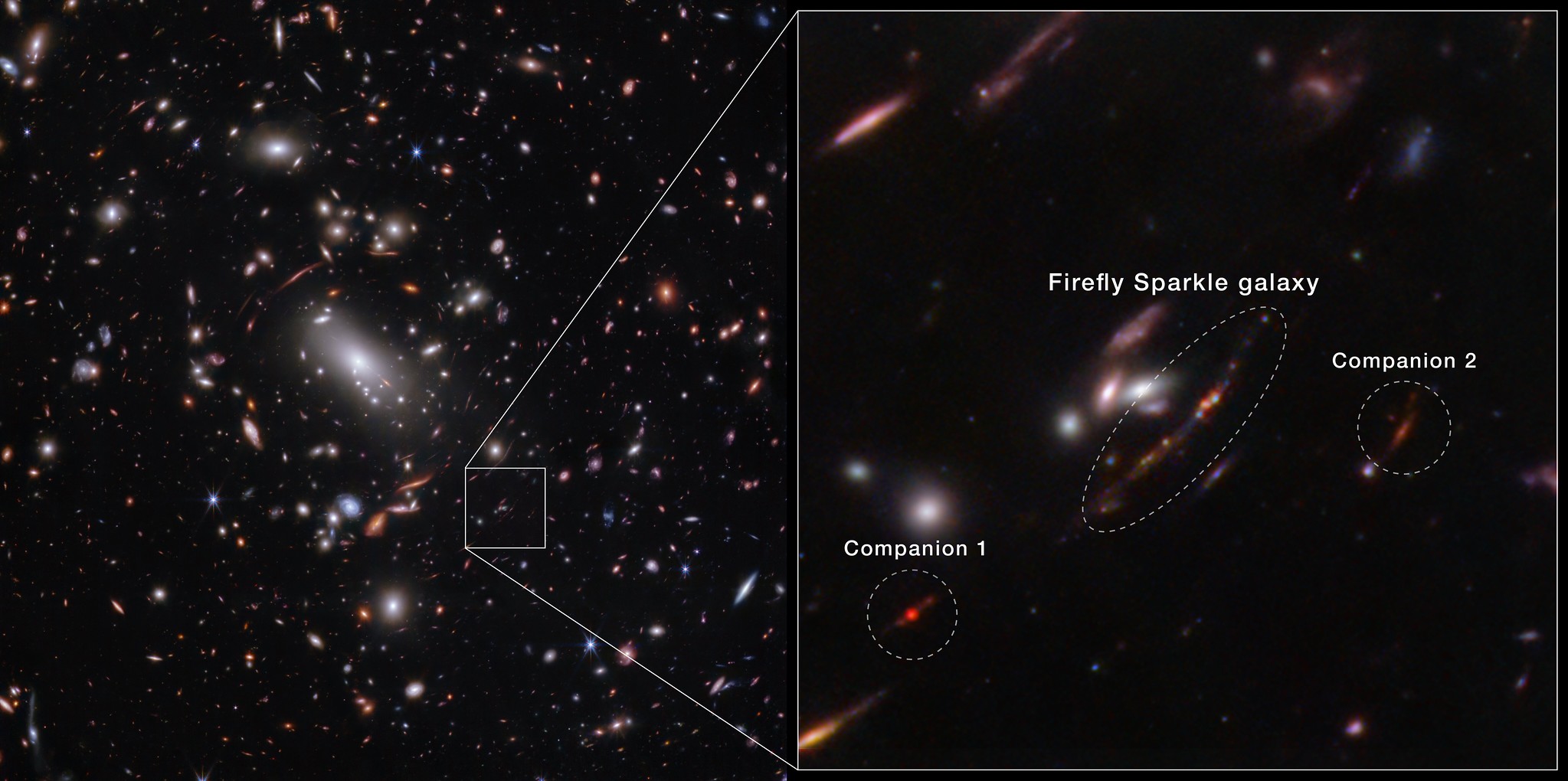
JWST caught the Firefly Sparkle — a galaxy as it looked just 600 million years after the Big Bang. Weigh it and it matches a young Milky Way, built "brick by brick" from ten sparkling star clusters — perhaps a baby photo of our own galaxy.
NASA, ESA, CSA, STScI
The Little Red Dots Mystery
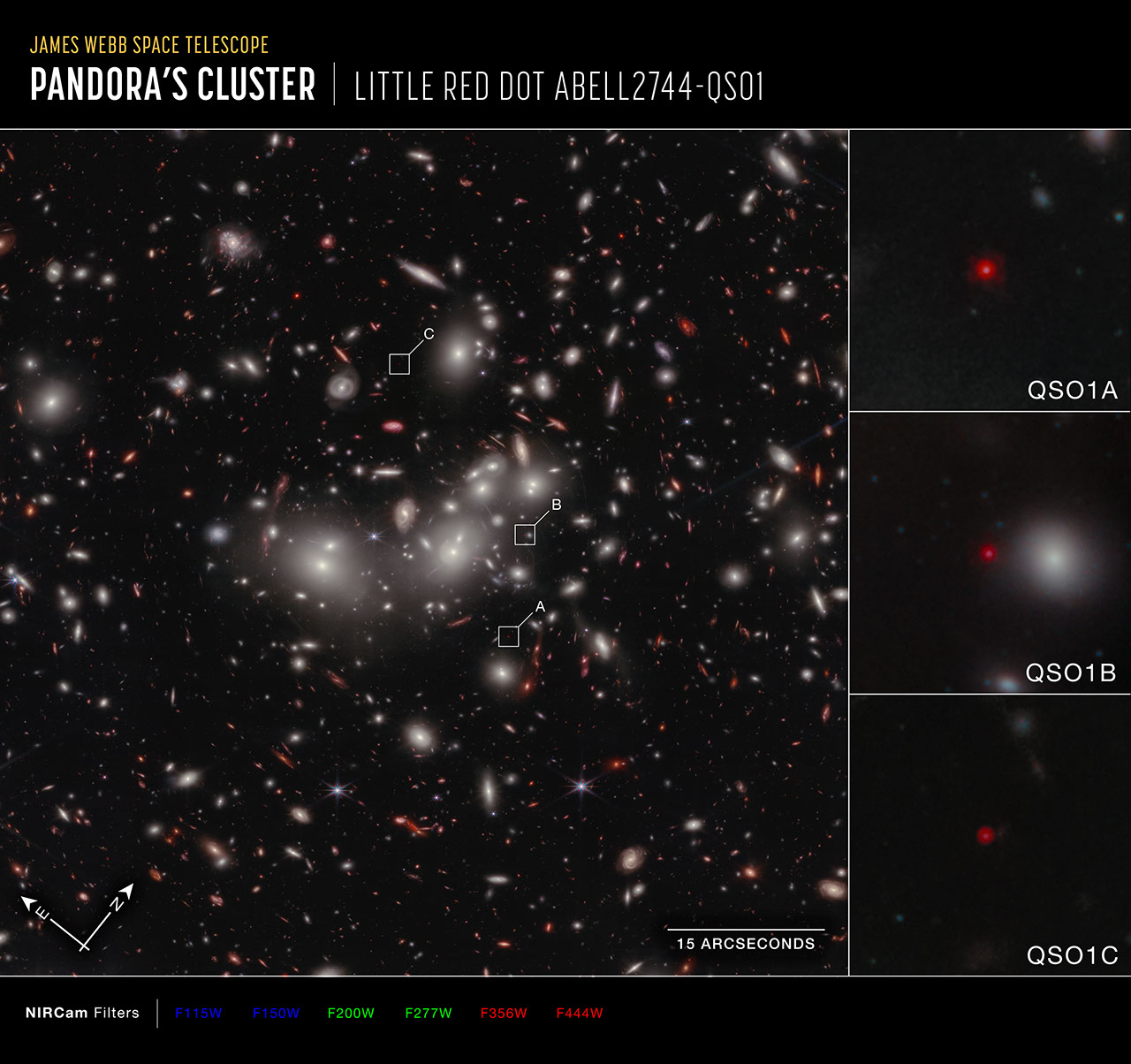
JWST keeps finding tiny, intensely red dots from the early universe that nobody predicted. The leading idea: each is a naked supermassive black hole — millions of Suns' worth, with almost no galaxy around it. No one is sure yet. This is the frontier, live.
NASA, ESA, CSA, STScI
Galaxies Grow by Colliding
Galactic Cannibalism
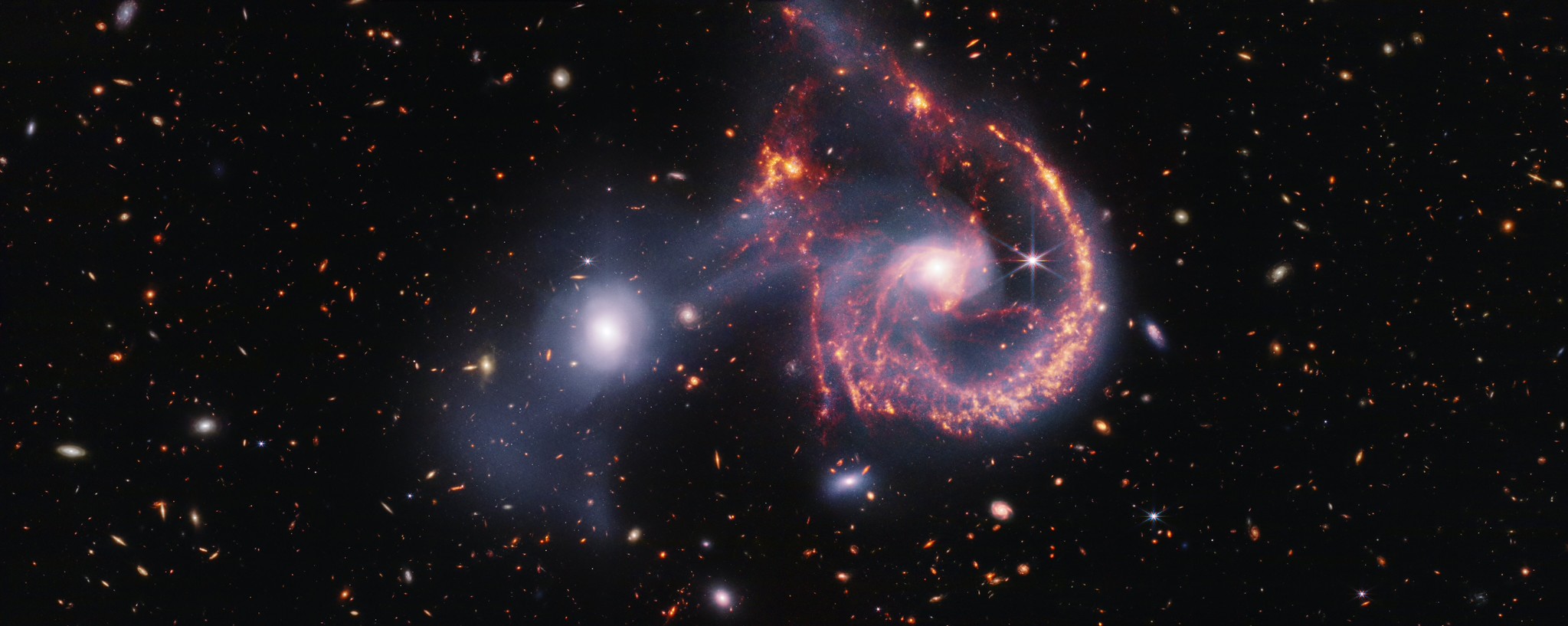
Over billions of years, galaxies crash into and merge with one another. This is Arp 107 — a spiral and an elliptical mid-collision, 465 million light-years away: their cores form the "eyes," and a bridge of pulled-out stars a faint "smile."
NASA, ESA, CSA, STScI
Do the Stars Crash?
Almost never.
Remember how empty space is? Stars inside a galaxy are like a handful of sand grains spread across an entire continent.
When two galaxies merge, the stars mostly glide past each other. It's the gas clouds that slam together — and light up with brand-new stars.
In ~4.5 billion years the Milky Way and Andromeda will merge. Some already call the result "Milkomeda." Earth will likely just get a spectacular new sky.
Einstein's Big Idea
One idea ties together three things we've already seen: light bending, galaxies orbiting black holes, and space stretching.
Mass and energy curve space itself into valleys, and everything — planets, light, whole galaxies — simply follows the curves. That's general relativity: gravity is the shape of space.
The Whole Thing Is Expanding
Galaxies Are Rushing Away
In the 1920s, Edwin Hubble noticed something staggering about the light from other galaxies.
Their barcode of light (from the stars talk) was shifted toward the red — stretched out, because they're moving away from us.
And the farther a galaxy is, the faster it flees.
Space Itself Is Stretching
Space itself is expanding, carrying the galaxies apart — like raisins in rising bread dough, drifting from each other as the dough swells around them.
Run that movie backward and everything was once together: the Big Bang, ~13.8 billion years ago.
Watching galaxies is how we learned the universe has a birthday — and is still growing today.
How We Know: Redshift & Blueshift
Light is a wave. A galaxy moving away stretches it toward red; moving closer squeezes it toward blue. Almost every galaxy's barcode is shifted red — the fingerprint of an expanding universe.
How We Measure the Impossible
The cosmic distance ladder
Rung 1: Parallax
Watch a nearby star across six months of Earth's orbit and it appears to wobble against the far background. A bigger wobble means a closer star.
The same depth trick your two eyes use — and exactly what Gaia does for a billion stars.
A Ladder to the Edge of the Universe
Each method reaches further and calibrates the next:
Every rung you've already met: parallax and pulsing stars, exploding stars, and stretched light — chained together from next door to the edge of the observable universe.
The Dark Universe
Most of the cosmos is invisible
Dark Matter: The Hidden Scaffolding
Every galaxy's bright disk sits inside a vast ball of dark matter — roughly five times the mass of all its stars. We map it purely by its gravity: the fast spin of galaxies and the way it bends light (that cosmic question mark). Its true identity remains open.
Dark Energy: The Cosmic Accelerator
The expansion is speeding up. Some unknown pressure — dark energy — pushes the universe apart faster and faster.
It makes up about 68% of everything, and its nature is among the deepest mysteries in physics.
The 95% We Can't See
Everything that glows — every galaxy, star, and planet in this talk — is that thin 5% sliver. The other 95% is dark: real, dominant, and still unknown.
Building a Universe in a Box
Simulated galaxies
Why Would You Simulate a Galaxy?
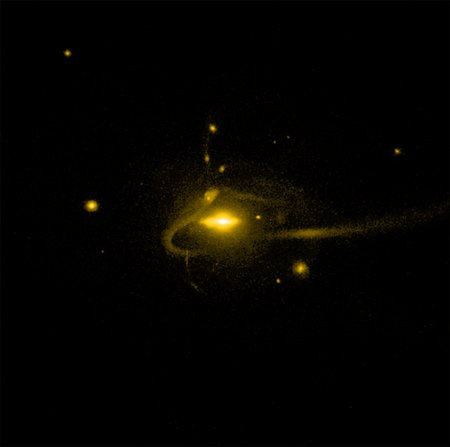
A galaxy takes billions of years to form. We can't wait — and we only ever catch each real one frozen in a single snapshot.
So we build one inside a computer and press play.
Start just after the Big Bang, hand the computer the laws of physics, and fast-forward 13 billion years to watch what grows.
What Goes In the Box
The same physics from the stars talk — now run forward in time, all at once:
- Gravity pulls matter into clumps — invisible dark matter builds the scaffolding first
- Gas flows and cools — the same fluid physics that balances a star, on a galactic scale
- Stars ignite and die; supernovae blast energy back out, stirring the gas (this "feedback" shapes everything)
- Black holes grow at the centers and push back on the galaxy around them
Every ingredient is something you already met — now cooperating to build a galaxy.
Press Play: A Galaxy Forms
Simulation: Zack Andalman — Princeton University
The recipe from the last few slides — actually run on a supercomputer.
Structure at Cosmic Dawn
Simulation: James Sunseri — Princeton University
A galaxy taking shape at redshift 9 — the cosmic dawn.
Universes That Take Months to Run
The big modern simulations — with names like IllustrisTNG, EAGLE, and FIRE — track millions of chunks of gas and dark matter at once.
They run for months on some of the largest supercomputers on Earth, burning millions of processor-hours to grow a single virtual universe.
This is a living, active corner of astrophysics — researchers build cosmos after cosmos, tweaking the recipe to see which one produces galaxies like the ones we observe.
Simulations Predicted the Web
Here's the result that makes this trustworthy:

Decades ago, simulations of just gravity and dark matter grew a cosmic web of glowing filaments and empty voids.
Then we mapped millions of real galaxies — and found the exact same web. The prediction came first.
A Simulated Galaxy, Up Close
Simulation: Phil Hopkins Research Group — FIRE project, Caltech
Every star here was grown from raw physics inside a supercomputer — a whole galaxy, built in code.
The Real Test: Which Is Which?
Put a real galaxy beside a simulated one:
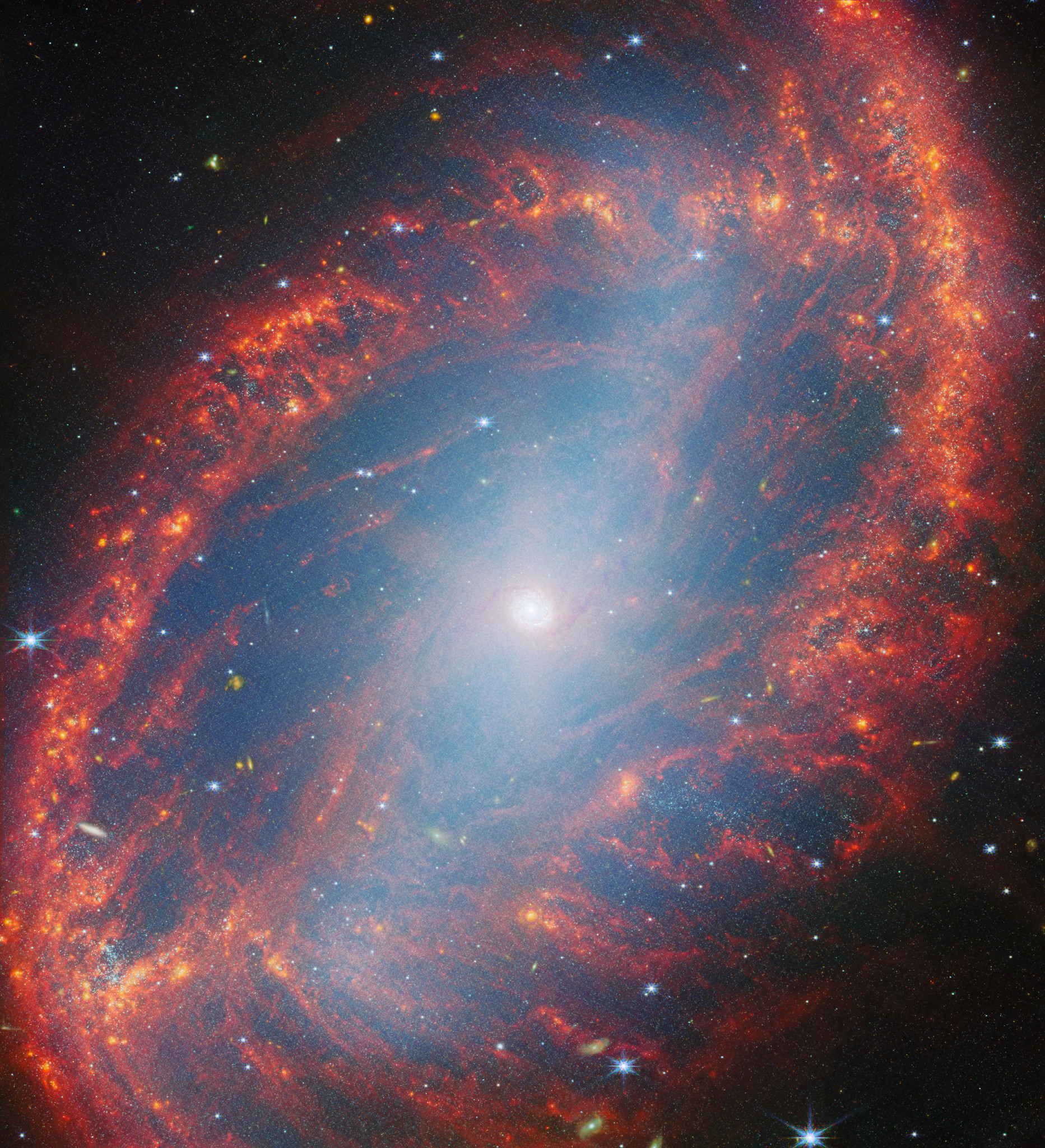
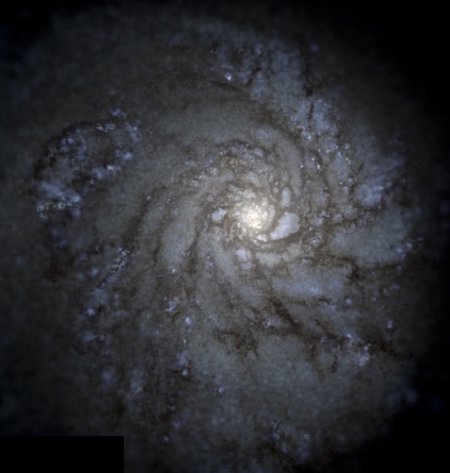
When the simulated galaxies get hard to tell from the real ones, that's the signal: our physics is right. We actually understand how galaxies are built.
Your Cosmic Address
Key Takeaways
- A galaxy is an island of stars — bound by gravity, and mostly made of invisible dark matter
- We live in one — the Milky Way, a barred spiral, with the Sun far out in the suburbs
- Shape and color tell the story — spirals form stars and glow blue; ellipticals are old and red
- Galaxies grow by colliding — and the universe is a vast web of them, trillions in all
- We can build them in a computer — and when the fakes match the real ones, we know we understand the universe
You live on a grain of sand…
…on a beach of two trillion galaxies.
Questions?
Marcus DuPont
Princeton University
marcus.dupont@princeton.edu
Image & Simulation Credits
Simulations: Zack Andalman (Princeton) • James Sunseri (Princeton) • Phil Hopkins Research Group (FIRE, Caltech).
Observed galaxies courtesy of NASA, ESA, CSA and the Space Telescope Science Institute (STScI), from the James Webb and Hubble Space Telescopes.
M74 (Phantom Galaxy): ESA/Webb, NASA & CSA, PHANGS-JWST Team • Centaurus A, Sombrero (M104), Arp 107, Firefly Sparkle, lensed "question mark," little red dots: NASA, ESA, CSA, STScI • M82 & Spiderweb protocluster: ESA/Webb, NASA & CSA • black-hole illustration: NASA/ESA.
Reproduced for education under NASA's image-use guidelines.